|
A Competitive Advantage Many Companies Are Still Missing – FTZ for Domestic Cargo
In today’s supply chain environment, the companies gaining an edge are not just negotiating better freight rates — they are redesigning how their logistics infrastructure works.
One of the most underutilized tools available to U.S. companies today is the Foreign Trade Zone (FTZ) program. While many organizations associate FTZs strictly with import duty deferral, the reality is that they can serve as a powerful financial and operational strategy across both international and domestic cargo flows.
Companies that integrate FTZs into their distribution model often gain advantages in cash flow, customs cost reduction, inventory control, and operational flexibility — benefits that can compound over time and create meaningful competitive differentiation.
Yet many companies still overlook how these programs can support their broader supply chain strategy.
The Hidden Advantage of Foreign Trade Zones — Even for Domestic Cargo
Foreign Trade Zones (FTZs) are often viewed purely as a tool for importers to defer duties. While that is certainly one of the benefits, it only scratches the surface of what zones can do for modern supply chains.
In reality, FTZs can serve as a strategic platform for both international and domestic cargo, offering financial, operational, and risk-management advantages that many companies are still not fully utilizing.
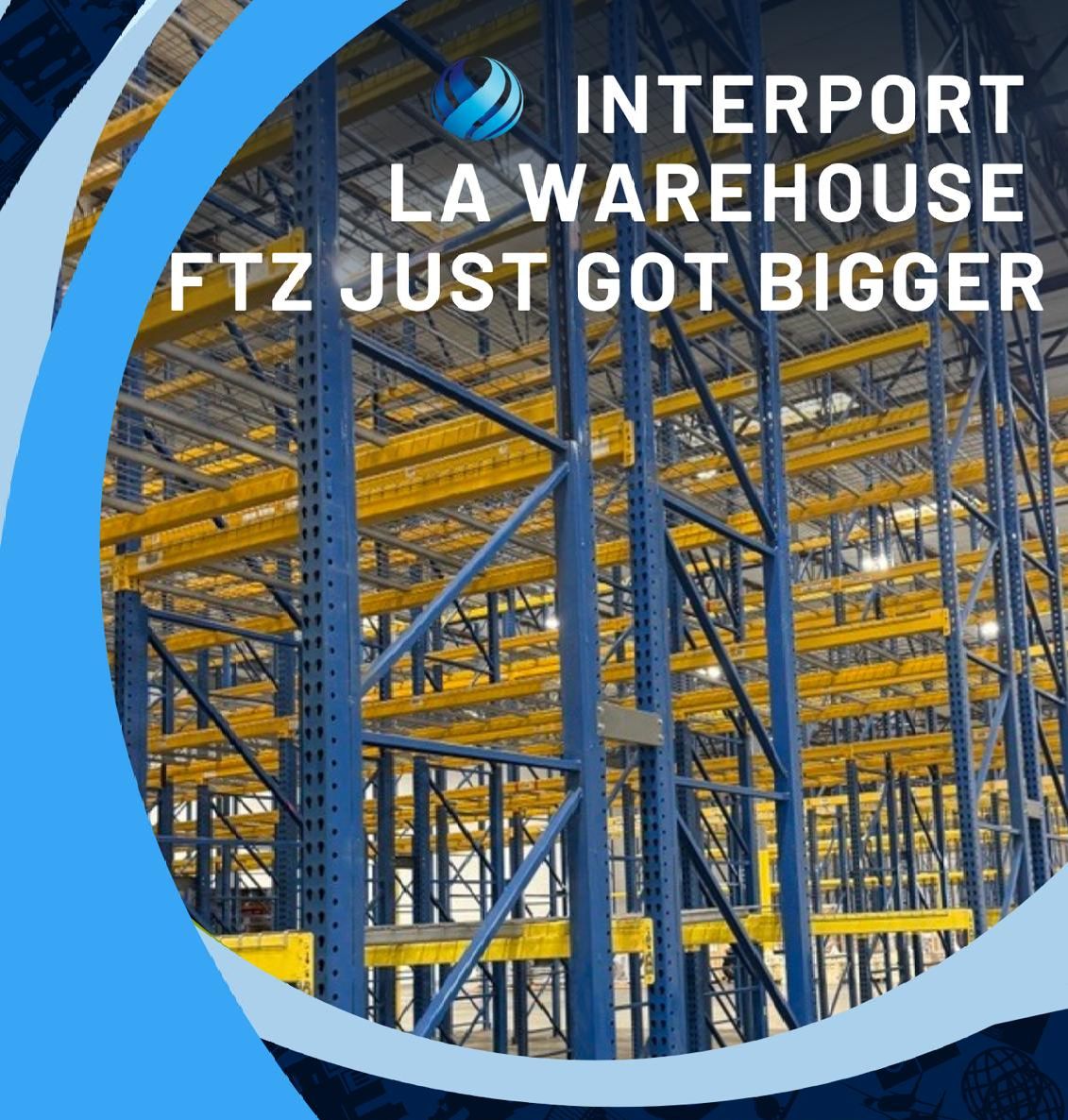
With facilities in Los Angeles and Miami, Interport works with companies that use FTZ programs not just to manage imports, but to improve cash flow, reduce fees, and create flexibility across their entire logistics operation.
Significant Cost Savings Through Weekly Entry
One of the most powerful financial benefits of the FTZ program is the ability to utilize Weekly Entry procedures.
Instead of filing a customs entry for every individual shipment, multiple shipments arriving throughout the week can be consolidated into a single customs entry. This allows companies to cap the Merchandise Processing Fee (MPF), which is currently limited to $614.35 per entry.
Without weekly entry, companies moving frequent shipments may pay this fee repeatedly throughout the week. With an FTZ, that same volume can be consolidated under a single entry.
For companies with consistent import volumes, this can translate into tens or even hundreds of thousands of dollars in annual savings.
For CFOs and CEOs focused on improving margins, this is often one of the most immediate financial advantages.
Improved Cash Flow Through Duty Deferral
Cargo admitted into an FTZ is not considered formally imported into U.S. commerce until it leaves the zone.
This allows companies to delay duty payments until the cargo is actually needed for domestic distribution, improving working capital and inventory financing flexibility.
For businesses carrying large inventories, the ability to control when duties are paid can have a meaningful impact on cash flow and balance sheet management.
Operational Protection Against Port and Airport Charges
Foreign Trade Zones can also serve as an important operational buffer when issues arise.
If a shipment encounters customs holds, documentation issues, or regulatory inspections, cargo can often be transferred into the FTZ instead of sitting at the port or airport accumulating demurrage or storage charges.
This flexibility can help companies avoid costly delays while resolving compliance or documentation issues.
Duty Elimination for Export Programs
Another key advantage applies to cargo that ultimately leaves the United States.
If goods admitted into an FTZ are exported rather than entered into U.S. commerce, no U.S. duties are paid.
This benefit still applies even if the cargo undergoes approved manipulation activities within the zone, such as kitting or assembly, repackaging or labeling, sorting or consolidation.
Turning Logistics into a Strategic Advantage
In today’s environment of rising logistics costs, regulatory complexity, and global uncertainty, supply chains must do more than simply move cargo from point A to point B.
They must support financial efficiency, operational flexibility, and risk mitigation.
Foreign Trade Zones provide companies with a tool that addresses all three.
Interport operates FTZ facilities in Los Angeles and Miami, supporting companies with distribution, cargo manipulation, export preparation, and strategic inventory management.
For companies evaluating ways to reduce logistics costs while improving supply chain agility, an FTZ strategy can be an important part of that conversation.
|